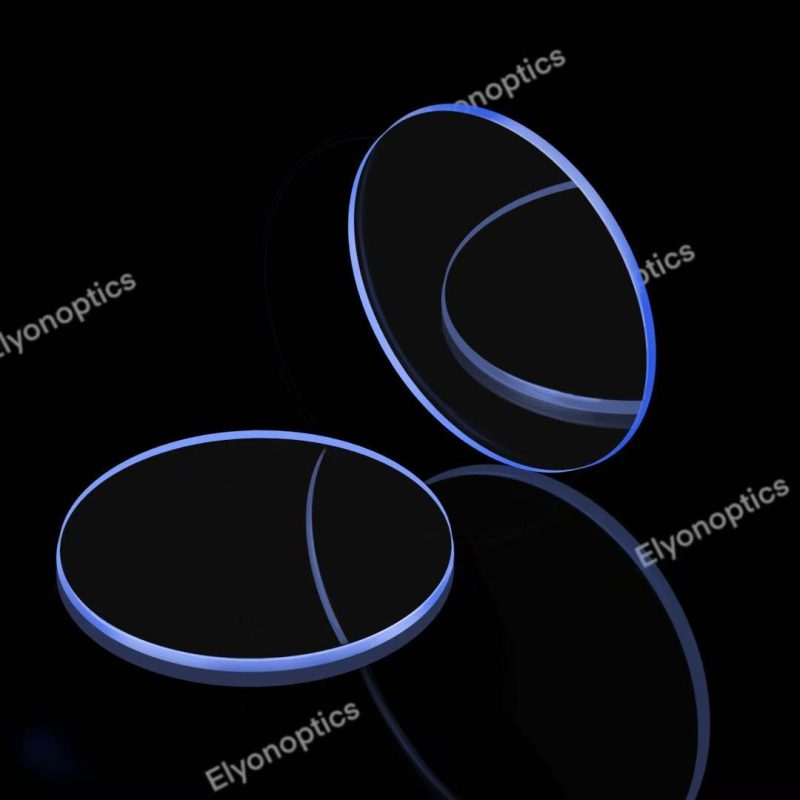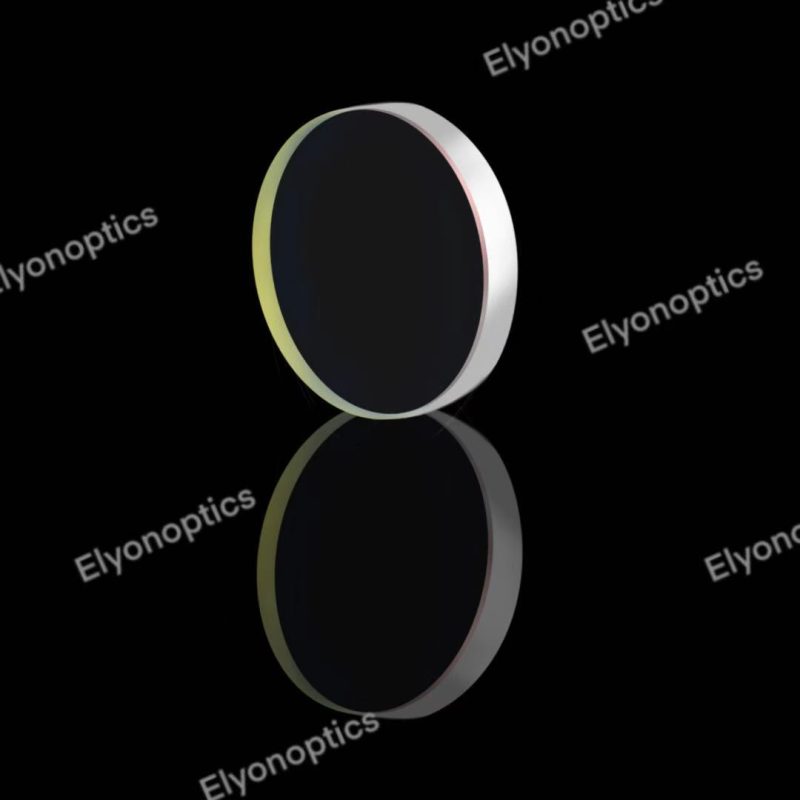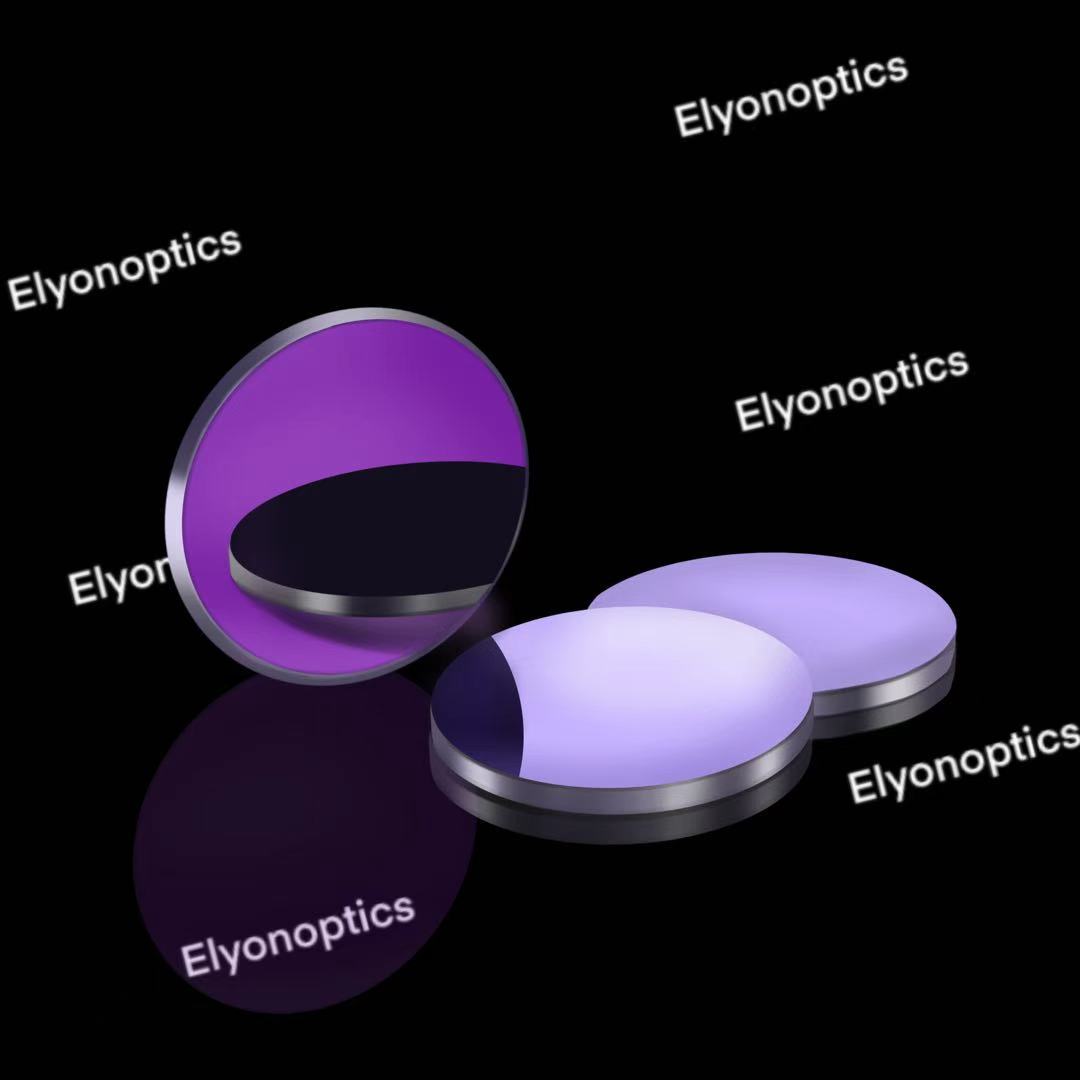
Silicon Windows
Silicon is used as an optical window primarily in the 3 to 5 micron band and as a subsrate for production of optical filters and windows.
Description
IR Windows Silicon Windows
Silicon (Si) is grown by Czochralski pulling techniques (CZ) and contains some oxygen that causes an absorption band at 9 microns. To avoid this, material can be prepared by a Float-Zone (FZ) process. Optical silicon is generally lightly doped (5 to 40 ohm cm) for best transmission above 10 microns, and doping is usually boron (P-type) and phosphorus (N-type). After doping silicon has a further pass band: 30 to 100 microns which is effective only in very high resistivity uncompensated material.
CZ Silicon is commonly used as substrate material for infrared reflectors and windows in the 1.5-8 micron region. The strong absorption band at 9 microns makes it unsuitable for CO2 laser transmission applications, but it is frequently used for laser mirrors because of its high thermal conductivity and low density.
Silicon material is primarily used for processing silicon window plates and silicon lenses, frequently applied in the 1.5-7μm wavelength range. Silicon mirrors are utilized in CO2 lasers and spectrometers.
Silicon(SI) Windows SPECIFICATION:
| Specification | Value |
|---|---|
| Material | Silicon (Si) |
| Dimension Tolerance | +0.0 / -0.1 mm |
| Thickness Tolerance | ±0.1 mm |
| Surface Quality | 60/40, 40-20, 20-10 |
| Clear Aperture | >85%, >90%, >95% |
| Flatness | λ/4 @ 633 nm or better |
| Parallelism | 3′ |
| Bevel | <0.25 mm × 45° |
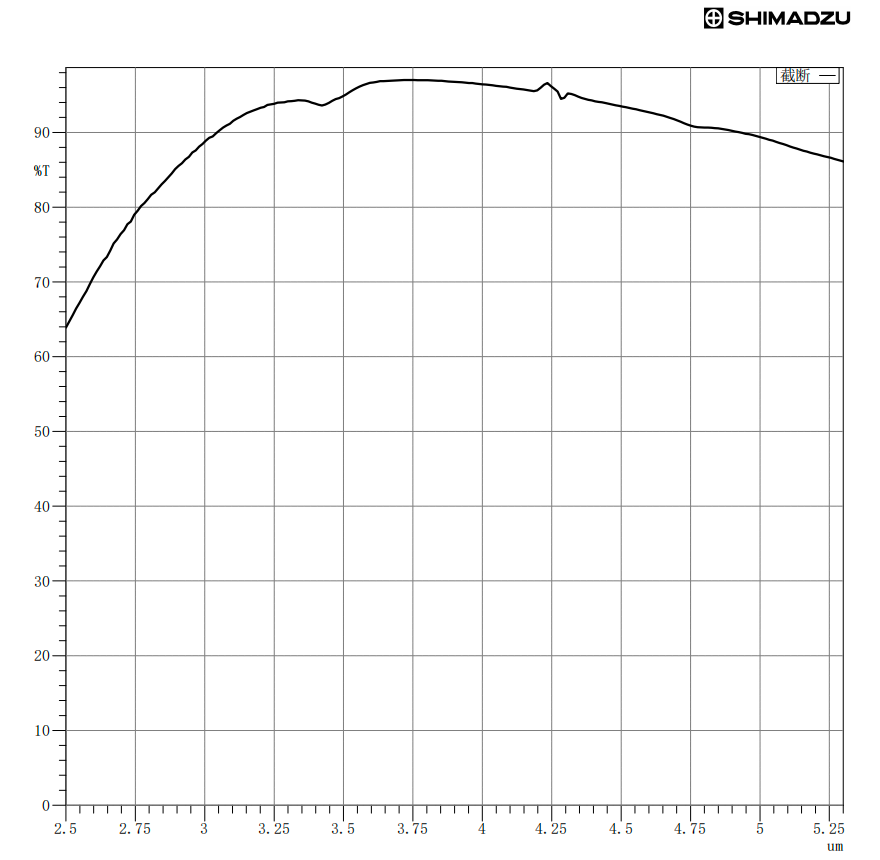
| Coating | AR / DLC / GOLD |
| Annual Capacity | 500,000 pcs/year |
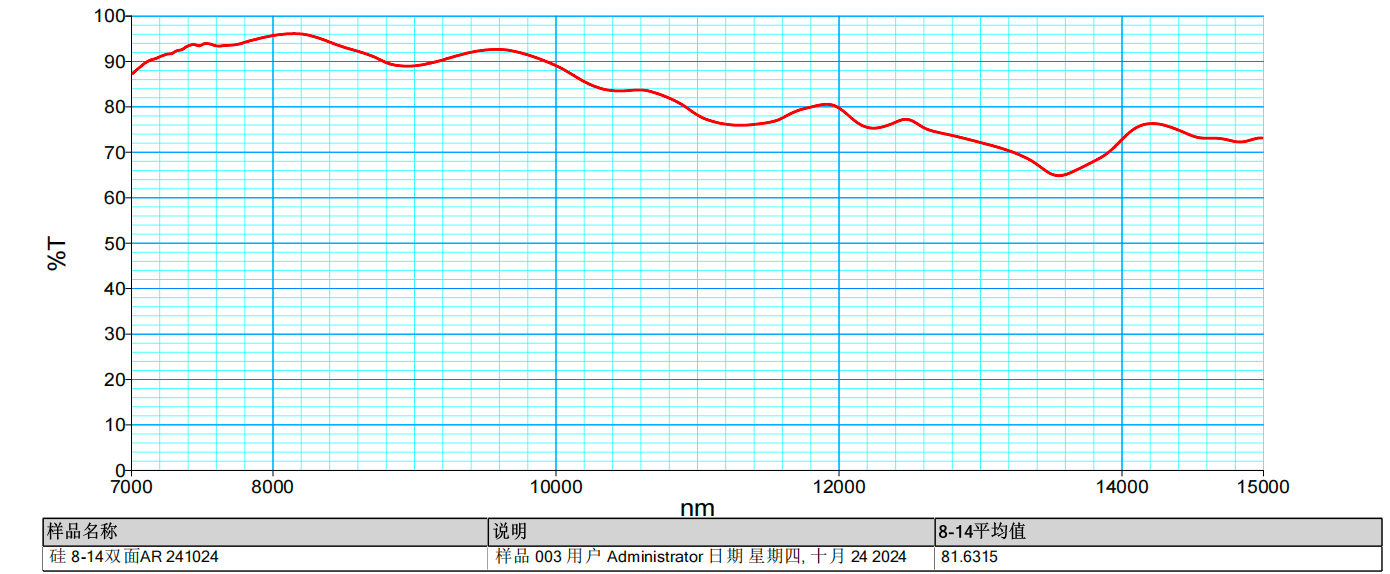
Measured double-sided AR curve:
FAQs
1. What is your MOQ for silica windows?
Our standard MOQ is 50 pieces for regular production.
For small orders (≤50 pcs), we can still accept production and provide full inspection reports and measurement data for each piece upon request.
2. Do you support small batch or prototype orders?
Yes. We support small batch and prototype production for testing and evaluation before mass production.
3. What is your production lead time?
- Standard polished fused silica windows: 4–5 weeks
- Coated optical windows (AR / HR): 5–6 weeks, depending on coating type and specifications
4. Do you provide inspection reports?
Yes. We provide quality inspection reports based on order quantity:
- ≤50 pcs: Full inspection data for each piece available
- 100–1,000 pcs: 5%–10% random sampling inspection reports
- >1,000 pcs: 0.5% sampling inspection reports
All inspection data includes dimensional and surface quality parameters.
5. What coating options are available?
We offer:
- Anti-Reflection (AR) coatings
- High-Reflection (HR) coatings
- Broadband coatings
- Custom wavelength coatings (UV / Visible / IR)
6. Can you manufacture custom sizes and shapes?
Yes. We support OEM manufacturing according to drawings.
Available shapes include:
- Round
- Square
- Rectangular
- Stepped
- Wedged
- Drilled / special structures
7. What materials do you use for fused silica windows?
We use high-purity optical-grade fused silica materials suitable for UV, visible, and laser applications, including equivalent materials from global optical standards.
8. What quality certifications do you have?
We are certified under international quality management systems, including:
- ISO 9001 Quality Management System
- IATF 16949 Automotive Quality System
- Good Standardization Practices Certification
We also apply strict internal quality control processes, including dimensional inspection, surface quality testing, and coating performance verification before shipment.