Cylindrical Lenses for Laser Beam Shaping and Line Generation
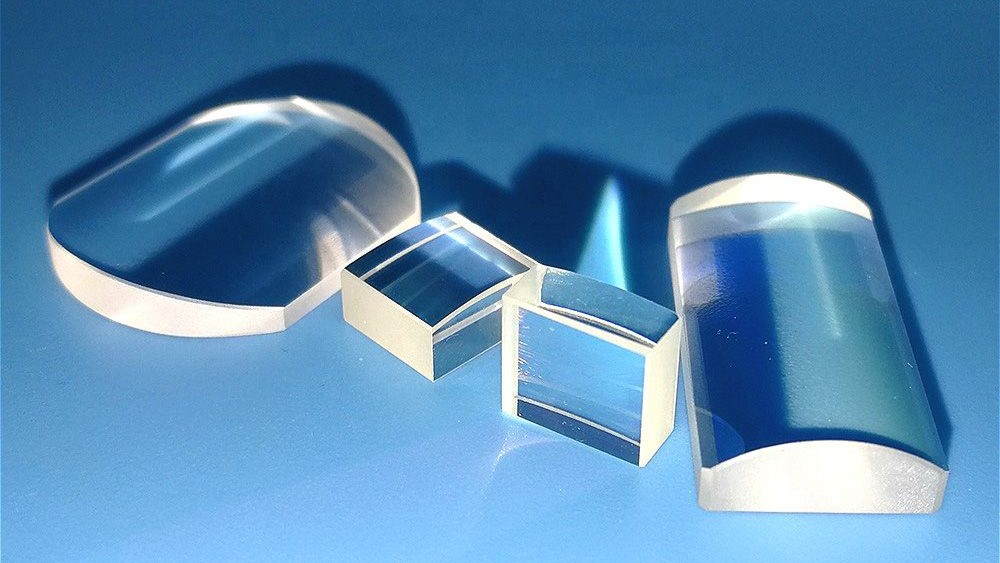
Cylindrical lenses are widely used in laser systems that require a beam to be focused or expanded in only one direction. Unlike spherical lenses, which focus light in both directions, cylindrical lenses have optical power along a single axis. This makes them useful for converting a laser beam into a line, adjusting beam dimensions, and creating the light distributions needed for industrial and scientific applications.
For optical equipment manufacturers and laser system integrators, selecting the right cylindrical lens depends on the laser wavelength, beam size, focal length, and required output profile.
How Cylindrical Lenses Shape a Laser Beam
A cylindrical lens has a curved surface in one direction and a flat or differently curved surface in the perpendicular direction. As light passes through the lens, it is focused or diverged along one axis while remaining largely unchanged along the other.
This difference in optical power allows cylindrical lenses to reshape a round laser beam into an elongated spot or a line. Depending on the lens design and system configuration, they can also expand a beam in one direction or compensate for differences between the horizontal and vertical beam dimensions.
The cylindrical lens orientation is important. Rotating the lens changes the direction of the line or the axis along which the beam is focused. Accurate alignment helps achieve the required line position, width, and uniformity.
Using Cylindrical Lenses for Laser Line Generation
Laser line generation is one of the most common applications of cylindrical lenses. A collimated laser beam passing through a suitable cylindrical lens can be focused into a narrow line rather than a small, round spot.
This is useful when a system needs to illuminate a long, narrow area instead of a single point. For example, laser measurement equipment can project a line onto an object to measure its surface profile, dimensions, or position. Machine vision systems can use line illumination to inspect edges, detect surface defects, and support automated positioning.
The resulting line depends on several factors, including the input beam diameter, lens focal length, wavelength, and working distance. The lens itself does not guarantee a perfectly uniform line. Beam quality, optical alignment, and the design of the complete optical system also affect the final result.
Cylindrical Lenses in Laser Beam Shaping
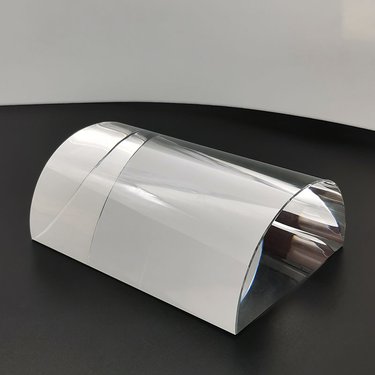
Beyond line generation, cylindrical lenses are used to adjust the shape and dimensions of laser beams.
In laser processing systems, the beam may need to cover a wider area in one direction while remaining narrow in the other. Cylindrical lenses can help create this distribution for applications such as laser marking, material processing, and surface treatment.
They are also useful when a laser source produces an elliptical beam. By modifying one axis independently, a cylindrical lens can help bring the beam closer to the dimensions required by the application.
For more demanding optical systems, two cylindrical lenses may be combined to control beam expansion or compression along different axes. The spacing, focal lengths, and orientation of the lenses must be selected according to the intended optical design.
Common Applications of Cylindrical Lenses
Cylindrical lenses are used across a range of industries where directional beam control is required.
Laser measurement and machine vision: Line illumination supports profile measurement, dimensional inspection, and the detection of surface irregularities.
Industrial laser processing: Cylindrical optics can modify the beam footprint to suit specific processing paths or target areas.
Scientific instruments: Research systems use cylindrical lenses for laser illumination, optical experiments, and the manipulation of beam geometry.
Medical and analytical equipment: Depending on the system design, cylindrical lenses can provide line-shaped illumination for imaging, scanning, and optical analysis.
Optical inspection systems: A controlled laser line can help identify surface variations and improve the consistency of automated inspection.
The appropriate lens design varies by application. A system used for basic positioning may have different requirements from one designed for high-precision metrology or laser processing.

Choosing the Right Cylindrical Lens
Several specifications should be considered before selecting a cylindrical lens for laser beam shaping.
Focal length: Focal length affects where the beam converges and the dimensions of the resulting line. A shorter focal length generally produces stronger focusing, while a longer focal length provides a different working distance and line geometry.
Laser wavelength: The lens material and any optical coating must be suitable for the operating wavelength. A lens designed for visible light may not provide the required transmission or coating performance at infrared wavelengths.
Input beam diameter: The diameter of the incoming beam influences the focused line dimensions. It should be considered together with the focal length and beam quality.
Material and surface quality: Material selection depends on wavelength, transmission requirements, operating environment, and power level. Surface quality and manufacturing accuracy can affect the performance of the finished optical system.
Dimensions and mounting requirements: Lens diameter, thickness, clear aperture, and mounting geometry must match the equipment design. Custom dimensions may be necessary for compact or specialized optical assemblies.
Coating requirements: Anti-reflection coatings can reduce reflection losses at the intended wavelength. Coating specifications should be matched to the laser source and operating conditions.
Providing these details during the selection process makes it easier to identify a lens that fits both the optical requirements and the mechanical design.
Plano-Convex and Plano-Concave Cylindrical Lenses
Plano-convex and plano-concave cylindrical lenses serve different purposes in optical systems.
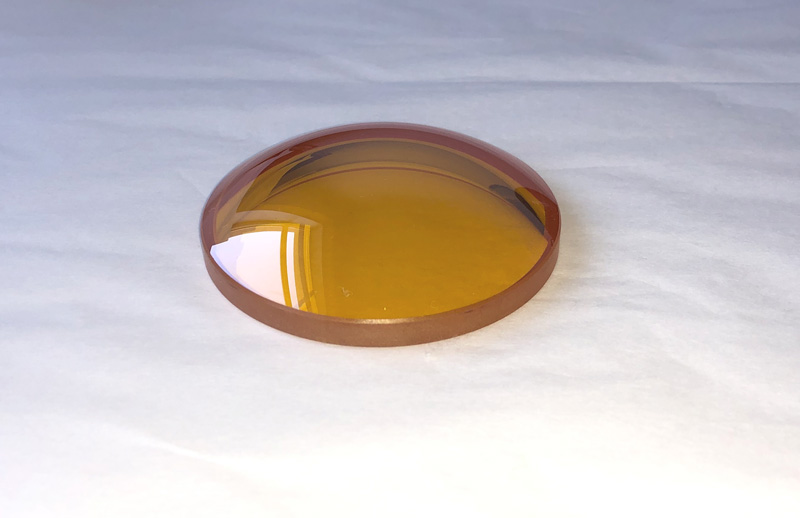
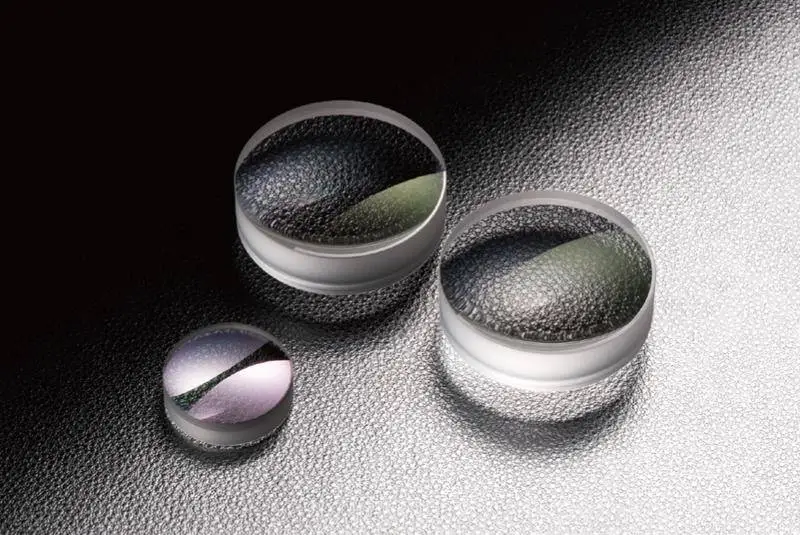
A plano-convex cylindrical lens has one convex surface and one flat surface. It is commonly used to focus a beam in one direction or generate a laser line from a suitable input beam.
A plano-concave cylindrical lens has one concave surface and one flat surface. It diverges light along a single axis and can be used for beam expansion or other applications requiring negative cylindrical optical power.
The choice between these designs depends on whether the system needs to converge or diverge the beam. Lens orientation, input beam conditions, and the desired output should all be considered when designing the optical path.
Custom Cylindrical Lenses for Laser Systems
Standard cylindrical lenses can meet many common optical requirements, but some applications call for customized dimensions, materials, focal lengths, or coatings.
Custom cylindrical lenses may be required when a system operates at a specific wavelength, has limited installation space, or needs to produce a line with defined dimensions at a particular working distance. Optical performance must be considered alongside mechanical compatibility to ensure that the lens can be integrated into the finished equipment.
When requesting a quotation, it is helpful to provide the operating wavelength, required focal length, lens dimensions, material preference, coating specifications, and expected quantity. If the lens is being used to generate a laser line, the target line length, working distance, and input beam diameter are also useful.
Drawings or existing lens specifications can help clarify dimensional and mounting requirements before production.
Cylindrical Lens Supplier for OEM Optical Components
ElyonOptics supplies optical components for B2B applications, including cylindrical lenses for laser beam shaping, line generation, and optical system integration.
We support inquiries involving lens dimensions, optical materials, coatings, and application-specific requirements. Whether you need standard cylindrical optics or components manufactured to a drawing, our team can review your specifications and help identify a suitable solution.
Contact ElyonOptics for a cylindrical lens quotation. Send us your required dimensions, focal length, operating wavelength, coating requirements, and estimated quantity. For custom projects, drawings or existing part specifications are welcome. Our team can review your requirements and provide a quotation based on your optical and mechanical specifications.