How to Choose the Right Optical Lens Material
Choosing an optical lens material is an important part of optical system design. Different materials offer different transmission ranges, refractive indexes, thermal properties, hardness, and chemical stability. The right choice depends on the wavelength, application, environment, and required optical performance.
1. Consider the Operating Wavelength
The first factor is the wavelength range of the application.
BK7 is widely used for visible and near-infrared applications, while fused silica offers excellent transmission into the ultraviolet and near-infrared ranges.
For infrared systems, materials such as CaF₂, silicon, germanium, ZnSe, and ZnS are commonly considered because of their suitable infrared transmission characteristics.
Selecting a material outside the required transmission range can significantly reduce system performance.
2. Refractive Index and Optical Design
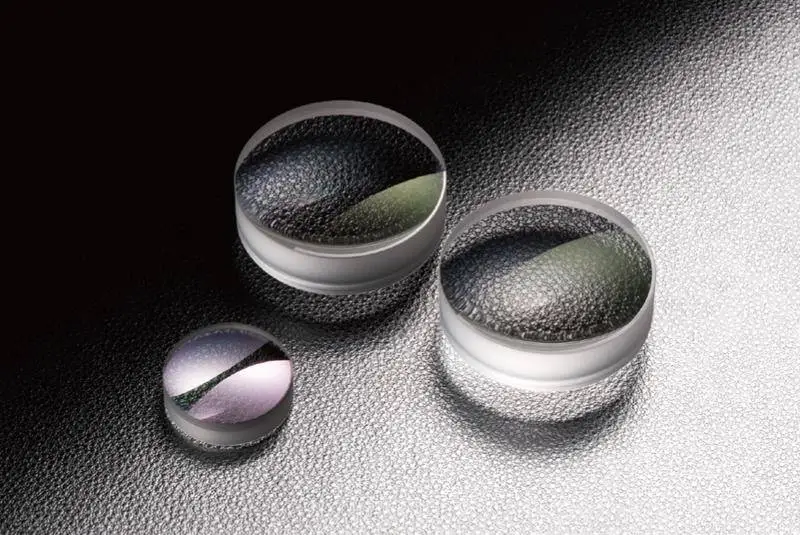
Refractive index affects how strongly a lens bends light.
Materials with a higher refractive index can provide the required optical power with a smaller lens curvature or more compact optical design. However, higher refractive index materials may also have higher reflection losses and require appropriate anti-reflection coatings.
The refractive index should therefore be evaluated together with the lens design rather than considered independently.
3. Thermal and Environmental Conditions
For applications involving temperature changes, thermal properties become particularly important.
Fused silica has very low thermal expansion and is widely used in laser and precision optical systems where thermal stability is important.
For outdoor, industrial, aerospace, or high-power laser applications, the material should also be evaluated for humidity, chemical exposure, temperature variation, and mechanical stress.
4. Mechanical Properties
Different optical materials have significantly different hardness and resistance to mechanical damage.
Sapphire provides excellent hardness and durability, making it suitable for demanding protective windows and harsh environments.
In contrast, materials such as CaF₂ and MgF₂ require more careful handling because they are relatively sensitive to mechanical damage.
The machining and handling requirements should be considered before selecting the material.
5. Application Requirements
The application often determines the most suitable material.
| Application | Common Material Options |
|---|---|
| Visible imaging | BK7, fused silica |
| UV optics | Fused silica, CaF₂ |
| Laser systems | Fused silica, BK7 |
| Infrared imaging | Germanium, silicon, ZnSe, ZnS |
| High-temperature windows | Sapphire, fused silica |
| CO₂ laser optics | ZnSe |
| Infrared windows | CaF₂, MgF₂, silicon, germanium |
These are general recommendations. The final selection should be based on the actual wavelength, temperature, optical design, and operating environment.
6. Manufacturing and Cost
Material selection also affects manufacturing difficulty and overall cost.
Some materials are relatively easy to grind and polish, while others require specialized equipment and tighter process control. Material availability, blank size, surface requirements, coating requirements, and production volume can all influence the final cost.
For custom optical components, the lowest-cost material is not necessarily the most economical option if it increases machining difficulty or compromises performance.
Choosing the Right Optical Material
A practical material selection process should consider:
- Operating wavelength
- Refractive index
- Transmission
- Thermal stability
- Mechanical strength
- Chemical resistance
- Required surface quality
- Manufacturing difficulty
- Overall cost
The best optical material is the one that provides the required optical performance while remaining suitable for the actual operating environment and manufacturing process.
Custom Optical Lenses from ElyonOptics
ElyonOptics supplies custom optical lenses and windows in BK7, fused silica, sapphire, CaF₂, MgF₂, ZnSe, ZnS, silicon, germanium, and other optical materials. Components can be manufactured according to specific drawings, dimensions, wavelength ranges, surface quality, and coating requirements for industrial, laser, imaging, machine vision, and infrared applications.