Ball Lenses in Fiber Optic and Photonic Applications
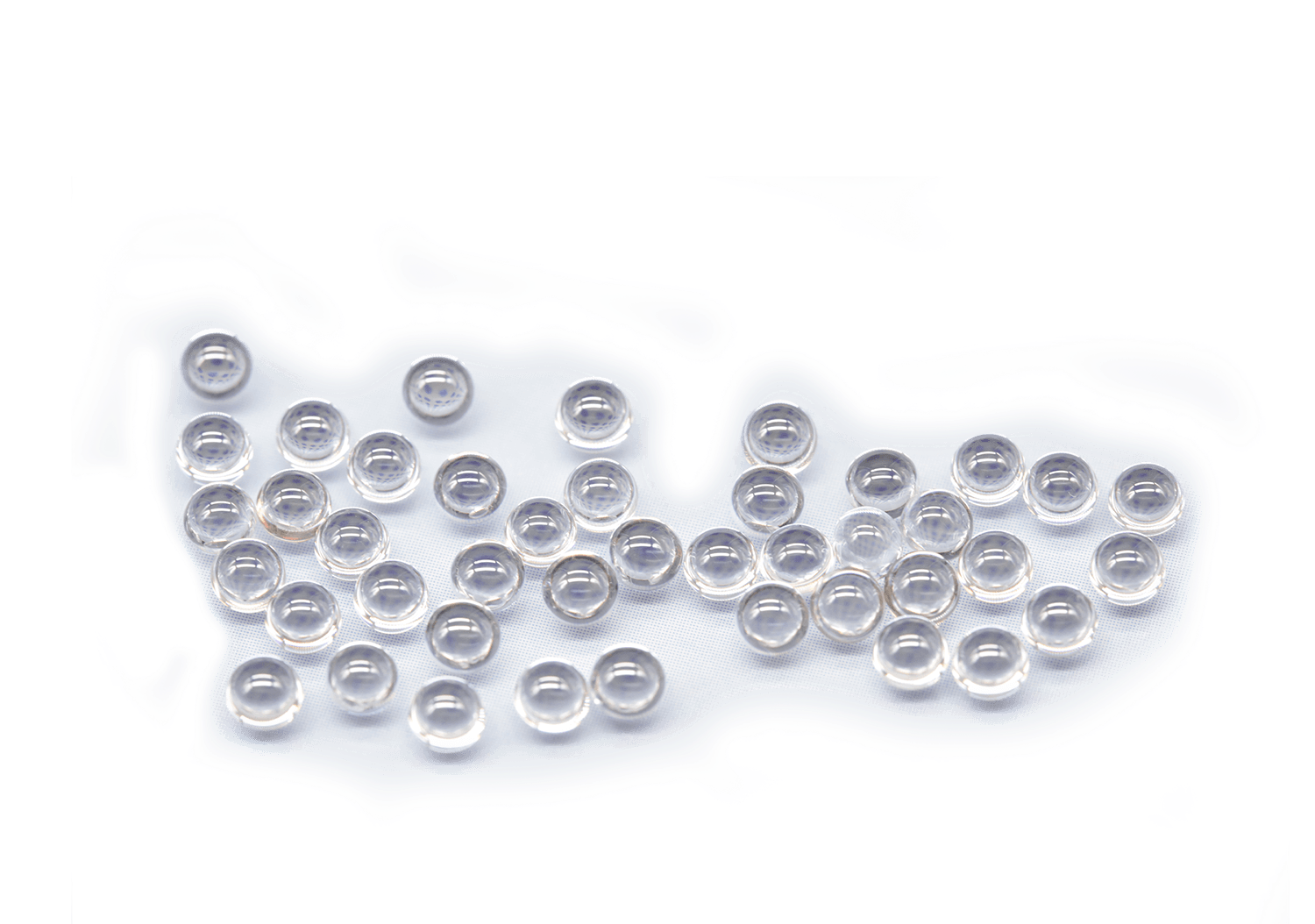
Ball lenses are widely used in fiber optic and photonic systems where compact optical coupling, beam collimation, and precise light focusing are required. Their spherical geometry provides short focal lengths and makes them suitable for compact optical assemblies.
Fiber-to-Fiber Coupling
Ball lenses can be used to couple optical signals between two optical fibers. They focus light from the transmitting fiber toward the receiving fiber, making them suitable for compact fiber coupling assemblies.
- Fiber-to-fiber optical coupling
- Multimode fiber coupling
- Fiber optic transceiver assemblies
- Optical communication modules
- Compact fiber coupling systems
For these applications, ball lens diameter, refractive index, surface quality, and dimensional accuracy can affect optical coupling performance.
Fiber-to-Laser Coupling
Ball lenses can couple light between optical fibers and laser sources. Their short focal length allows them to be integrated into compact laser diode assemblies where the available optical path is limited.
- Laser diode modules
- Fiber-coupled laser systems
- Semiconductor laser assemblies
- Optical transmitters
- Photonic sensing equipment
Material selection depends on the operating wavelength and required transmission range. Visible, near-infrared, and infrared applications may require different optical materials.
Beam Collimation
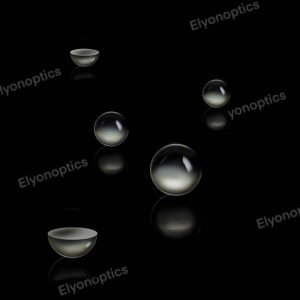
Ball lenses can help convert divergent light from a fiber or small optical emitter into a more collimated beam. This makes them useful in compact photonic devices where conventional multi-element lens assemblies may require more space.
- Fiber optic transmitters
- Laser modules
- Optical sensors
- Photonic instruments
- Compact optical communication devices
The ball lens diameter and optical material should be selected according to the emitter size, wavelength, working distance, and required beam characteristics.
Fiber Optic Transceivers
Compact ball lenses can be incorporated into fiber optic transceiver designs to provide optical coupling between semiconductor devices and optical fibers.
Depending on the system design, a ball lens may be positioned between:
- Laser diode and optical fiber
- LED and optical fiber
- Photodetector and optical fiber
- Optical fiber and photonic chip
For high-volume optical modules, dimensional consistency and surface quality are important because small variations can affect coupling performance during assembly.
Photonic Integrated Systems
Ball lenses can be used in compact photonic systems for coupling light into or out of small optical components. Their small footprint makes them suitable for optical assemblies where installation space and alignment requirements are important.
- Photonic integrated circuits
- Optical interconnects
- Micro-optical assemblies
- Optical sensing modules
- Integrated photonic devices
Depending on the system architecture, ball lenses may be combined with optical fibers, laser diodes, photodetectors, prisms, optical windows, or other micro-optical components.
Optical Sensing Applications
Ball lenses are used in optical sensing systems where light needs to be focused onto a small detection area or efficiently coupled into an optical fiber.
- Fiber optic sensors
- Compact spectroscopic systems
- Optical detectors
- Biomedical optical instruments
- Industrial sensing equipment
For sensing applications, wavelength compatibility, optical transmission, and focusing characteristics are important when selecting the lens material and dimensions.
Key Specifications for Ball Lens Selection
The appropriate ball lens depends on the optical system, wavelength, coupling configuration, and mechanical assembly requirements.
| Specification | Typical Consideration |
|---|---|
| Lens Diameter | Selected according to fiber size, emitter dimensions, optical path, and available assembly space. |
| Optical Material | Depends on operating wavelength and required transmission characteristics. |
| Refractive Index | Affects focal length, coupling performance, and beam behavior. |
| Surface Quality | Important for reducing scattering and maintaining optical performance. |
| Surface Accuracy | Controls the consistency of focusing and coupling performance. |
| Optical Coating | AR coatings can be specified for particular wavelength ranges when required. |
| Dimensional Tolerance | Important for precision positioning and automated optical assembly. |
Optical Materials for Ball Lenses
Different optical materials can be selected according to the operating wavelength, refractive index, environmental conditions, and required optical performance.
- Fused Silica: Suitable for many visible and near-infrared optical applications.
- BK7 Optical Glass: Used for general optical and photonic applications.
- Sapphire: Suitable for applications requiring high hardness and durability.
- High-Index Optical Glass: Useful for compact focusing and optical coupling designs.
- IR Optical Materials: Available for specific infrared wavelength applications.
Custom Ball Lenses for Optical Assemblies
Standard ball lenses may not always match the requirements of a specific fiber optic or photonic assembly. Custom specifications can be developed according to the optical design and mechanical requirements.
Custom ball lens requirements may include:
- Non-standard lens diameter
- Specific optical material
- Custom dimensional tolerance
- Specified surface quality and surface accuracy
- Anti-reflection coating
- Specific operating wavelength
- Custom packaging for optical assembly
- Prototype and volume production
Drawings, optical specifications, or application requirements can be provided for evaluation before production.