Why Ball Lenses Are Essential for Modern Medical Optics
Modern medical technology relies heavily on precision optics to deliver accurate diagnosis, minimally invasive treatments, and reliable laboratory analysis. From endoscopic imaging to laser therapy and optical sensing, ball lenses have become indispensable optical components thanks to their compact structure, excellent light-focusing capability, and efficient fiber coupling performance.
As healthcare equipment continues to evolve toward higher precision and smaller dimensions, the demand for high-quality ball lenses and custom optical components continues to grow. Understanding how ball lenses work and where they are used helps medical device manufacturers select the right optical solutions for their applications.
What Are Ball Lenses?
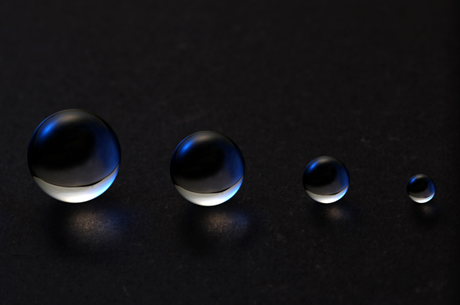
Ball lenses are fully spherical optical elements manufactured from high-quality optical materials such as BK7, Sapphire, Fused Silica, Ruby, or optical glass. Unlike conventional plano-convex or bi-convex lenses, a ball lens has a complete spherical geometry that allows it to focus or collimate light with minimal optical complexity.
Because of their symmetrical design, ball lenses are widely used in fiber optic systems, laser modules, optical sensors, and medical imaging devices where compact size and precise light transmission are critical.
Common optical materials for medical ball lenses include:
- BK7 Ball Lenses
- Sapphire Ball Lenses
- Fused Silica Ball Lenses
- Ruby Ball Lenses
- High Refractive Index Glass Ball Lenses
Each material offers unique advantages in terms of transmission wavelength, durability, chemical resistance, and laser performance.
Why Ball Lenses Are Important in Medical Optics
Medical optical systems require exceptional accuracy. Even slight optical losses can affect image quality or reduce diagnostic reliability. High-precision ball lenses help optimize optical performance in several ways.
Superior Fiber Optic Coupling
One of the primary applications of ball lenses is fiber optic coupling. Medical devices frequently transmit light through optical fibers for imaging, sensing, or laser delivery.
Precision ball lenses efficiently couple light between:
- Optical fibers
- Laser diodes
- Photodetectors
- Fiber optic sensors
Higher coupling efficiency means improved signal strength, lower insertion loss, and more stable medical measurements.
Many modern medical instruments are becoming increasingly miniaturized.
Devices such as:
- Endoscopes
- Catheters
- Optical probes
- Wearable medical sensors
require miniature optical components that fit into limited spaces without sacrificing performance. Compact ball lenses provide excellent focusing capability while occupying very little space, making them ideal for portable and minimally invasive medical equipment.
High Optical Precision
Medical imaging demands high-resolution optical performance.
Precision-polished ball lenses offer:
- Excellent surface quality
- Tight diameter tolerance
- Accurate concentricity
- Stable focal characteristics
These features help reduce optical aberrations and improve image clarity in sensitive diagnostic equipment.
Applications of Ball Lenses in Medical Devices
The versatility of ball lenses allows them to be integrated into numerous medical optical systems.
Endoscopy Systems
Endoscopes require compact optical assemblies capable of transmitting and focusing light inside the human body.
High-quality ball lenses are used to:
- Focus illumination
- Improve image transmission
- Increase fiber coupling efficiency
- Enhance optical signal collection
These improvements contribute to clearer visualization during minimally invasive procedures.
Optical Coherence Tomography (OCT)
Optical Coherence Tomography is widely used in ophthalmology, cardiology, and dermatology.
In OCT systems, precision ball lenses help:
- Couple light into fiber optics
- Focus laser beams
- Improve signal quality
- Increase imaging resolution
Reliable optical alignment is essential for producing accurate cross-sectional medical images.
Laser Medical Equipment
Medical lasers are used for:
- Eye surgery
- Dermatology
- Dentistry
- Cosmetic procedures
- Tumor treatment
Precision ball lenses help shape, focus, and direct laser beams with high accuracy, improving treatment precision while minimizing damage to surrounding tissue.
Biomedical Sensors
Many diagnostic instruments rely on optical sensing technology.
Ball lenses improve:
- Optical sensor sensitivity
- Light collection efficiency
- Signal stability
- Measurement accuracy
Applications include blood analysis equipment, biochemical analyzers, fluorescence detection systems, and laboratory instruments.
Fiber Optic Medical Instruments
Fiber optic technology has become standard in many medical devices.
Precision ball lenses are commonly used in:
- Fiber optic probes
- Spectroscopy equipment
- Medical communication systems
- Optical monitoring devices
Their ability to efficiently transfer light makes them one of the most valuable optical components in fiber-based medical systems.
Advantages of Ball Lenses Compared with Traditional Lenses
Although many optical systems use plano-convex lenses or aspheric lenses, ball lenses provide several unique advantages.
| Feature | Ball Lenses | Conventional Lenses |
|---|---|---|
| Compact size | Excellent | Moderate |
| Fiber coupling | Excellent | Good |
| Symmetrical design | Yes | No |
| Alignment simplicity | High | Medium |
| Miniaturized systems | Ideal | Limited |
| Optical integration | Easy | More complex |
These advantages explain why ball lenses are increasingly selected for compact medical optical assemblies.
Material Selection for Medical Ball Lenses
Choosing the proper material is essential for achieving optimal optical performance.
BK7 Ball Lenses
BK7 provides excellent visible light transmission and cost-effective performance for many medical imaging applications.
Sapphire Ball Lenses
Sapphire offers exceptional hardness, chemical resistance, and durability, making it suitable for demanding medical environments.
Fused Silica Ball Lenses
Fused Silica features outstanding UV transmission, low thermal expansion, and excellent laser resistance, making it ideal for high-power laser systems and precision medical optics.
Ruby Ball Lenses
Ruby ball lenses provide high hardness and wear resistance, making them suitable for specialized sensing and measurement applications.
Manufacturing Requirements for Precision Ball Lenses
Medical optics require strict quality control throughout the manufacturing process.
Professional ball lens manufacturers typically focus on:
- High surface accuracy
- Low surface roughness
- Tight dimensional tolerances
- High optical transmission
- Precision polishing
- Advanced inspection equipment
- ISO-compliant quality management
Reliable manufacturing ensures every ball lens meets the demanding requirements of medical optical systems.
Choosing the Right Ball Lens Manufacturer
Selecting an experienced ball lens manufacturer is just as important as choosing the correct optical design.
When evaluating suppliers, consider:
- Material options
- Precision manufacturing capability
- Custom diameter availability
- Coating services
- Optical inspection standards
- OEM and custom manufacturing experience
- Consistent product quality
- Global supply capability
A trusted optical components manufacturer can provide customized ball lenses tailored to specific medical equipment requirements.
Conclusion
As medical technology continues to advance, the importance of precision optical components continues to increase. Ball lenses play a critical role in fiber optic coupling, laser delivery, medical imaging, optical sensing, and minimally invasive diagnostics.
Whether used in endoscopes, OCT systems, biomedical sensors, or laser medical equipment, high-quality ball lenses help improve optical efficiency, imaging performance, and overall system reliability. By partnering with an experienced manufacturer of precision optical components, medical device companies can obtain customized ball lenses that meet the highest standards of performance, consistency, and long-term reliability.