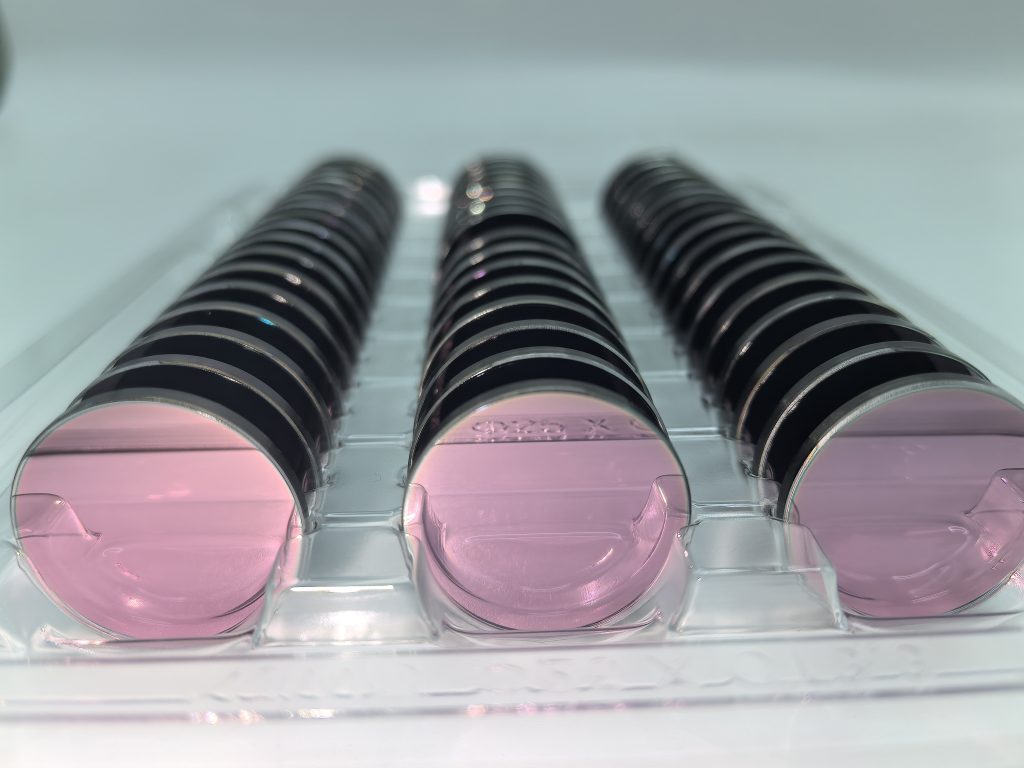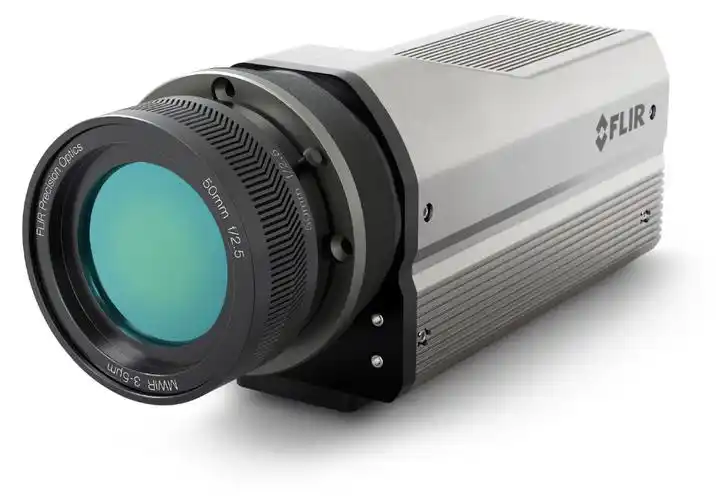
Infrared Windows for IR Sensors and Detection Systems
Infrared sensors and detection systems are widely used in thermal imaging, industrial monitoring, environmental sensing, security systems, spectroscopy, and aerospace applications. In many of these systems, an infrared window is positioned between the external environment and the sensitive detector to provide optical transmission while protecting internal components.
Unlike conventional optical windows designed primarily for visible wavelengths, infrared windows must be selected according to the system’s operating wavelength, detector sensitivity, environmental conditions, and required transmission performance. The choice of window material, coating, thickness, and surface specifications can directly affect the overall performance of an IR sensing system.
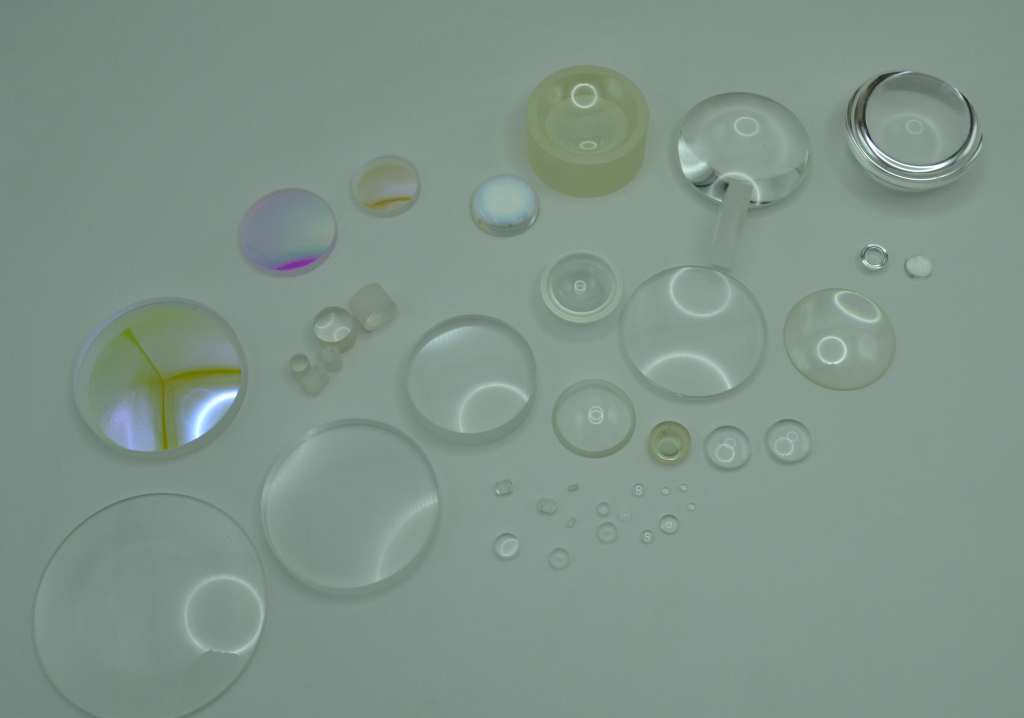
ElyonOptics provides custom infrared optical windows in materials such as germanium, silicon, zinc selenide (ZnSe), zinc sulfide (ZnS), sapphire, and calcium fluoride (CaF₂), with configurations tailored to different infrared sensing and detection requirements.
What Is an Infrared Window?
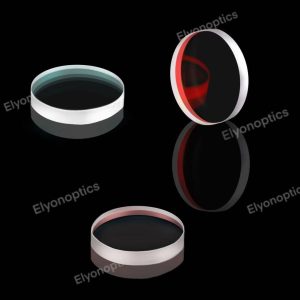
An infrared window is a flat optical component designed to transmit infrared radiation while protecting an infrared sensor, detector, or other optical components from the surrounding environment.
In a typical IR detection system, the window is installed at the front of the optical path:
External infrared radiation → Infrared Window → IR Optics → Detector
The window does not normally provide focusing power. Instead, its primary functions are to maintain sufficient infrared transmission, protect sensitive components, and provide a stable optical interface between the internal system and the external environment.
Depending on the application, an infrared window may need to withstand dust, moisture, temperature changes, mechanical impact, pressure differences, or other environmental conditions.
Why Infrared Windows Are Important for IR Sensors
The detector is one of the most sensitive components in an infrared sensing system. Any optical element placed in front of it can influence the amount and quality of infrared radiation reaching the detector.
A properly designed infrared window helps provide:
- High transmission within the required infrared wavelength range
- Protection against dust, moisture, and environmental contamination
- Mechanical protection for internal optical components
- Reduced optical losses through suitable coatings
- Stable performance under specified operating conditions
- Compatibility with the sensor’s spectral response
For demanding systems, the window should not be considered simply as a protective cover. It forms part of the optical path and therefore needs to be specified as an optical component.
Common Applications of Infrared Windows
Infrared windows are used across a wide range of sensing and detection systems. The required material and optical specifications depend heavily on the application.
Thermal Imaging Systems
Thermal cameras detect infrared radiation emitted by objects and convert it into temperature or thermal images. An infrared window can protect the detector and internal optics while allowing the required infrared wavelengths to pass through.
Materials such as germanium and silicon are commonly considered for thermal imaging applications, depending on the operating wavelength and system design.
Typical applications include:
- Industrial thermal inspection
- Electrical equipment monitoring
- Predictive maintenance
- Building inspection
- Security and surveillance
- Automotive thermal imaging
Infrared Sensors
Infrared sensors are used to detect radiation, temperature changes, movement, gas concentrations, and other physical parameters.
The window material must provide suitable transmission over the sensor’s operating spectral range. For compact sensor assemblies, dimensions, thickness, coating, and mechanical integration can also be important considerations.
IR Detection Systems
Infrared detectors are used in scientific instruments, industrial equipment, environmental monitoring systems, and advanced sensing platforms.
An optical window positioned in front of the detector can protect the detector assembly while maintaining the required infrared transmission. For systems operating in specific wavelength bands, the window material and coating need to be matched to the detector response.
Industrial Monitoring and Inspection
Infrared sensing allows manufacturers to perform non-contact temperature measurement and monitor equipment without physical contact.
Infrared windows may be integrated into inspection equipment, thermal monitoring systems, furnaces, electrical cabinets, and other industrial installations where the optical components must operate reliably in challenging environments.
Aerospace and Defense Sensing
Infrared optical systems used in aerospace and defense applications can require high-performance windows with carefully controlled transmission, mechanical properties, and environmental durability.
Depending on the wavelength range and system architecture, materials such as germanium, silicon, ZnSe, ZnS, and sapphire may be considered for different applications.
Common Materials for Infrared Windows
There is no single infrared window material suitable for every IR detection system. Material selection should begin with the required wavelength range and then consider mechanical, thermal, environmental, and optical requirements.
Germanium Infrared Windows
Germanium is one of the most widely used materials for infrared optical components, particularly in thermal imaging and long-wave infrared applications.
Its high refractive index and useful transmission in the infrared make it suitable for many thermal imaging and IR detection systems.
Germanium windows are commonly considered for:
- Thermal imaging cameras
- Thermal sensors
- IR detection systems
- Security imaging
- Aerospace and defense optics
Because germanium has a relatively high refractive index, an appropriate anti-reflection coating is often important for maximizing transmission.
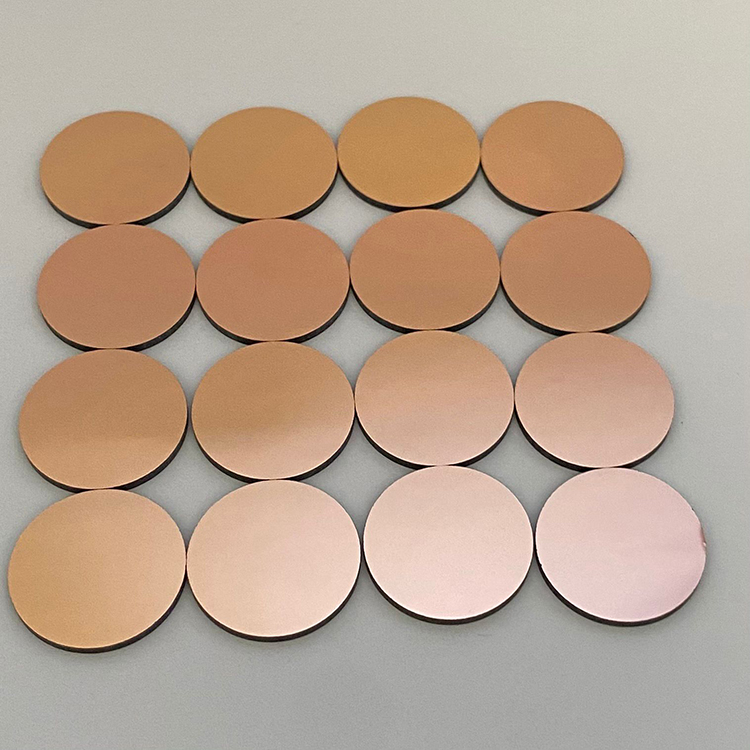
Silicon Infrared Windows
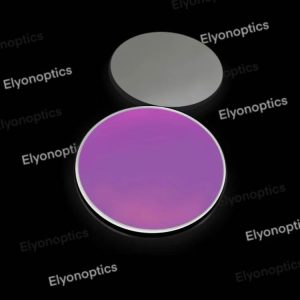
Silicon is another important material for infrared optical applications. It offers good mechanical properties and is commonly used in infrared systems operating in suitable wavelength ranges.
Silicon windows can be considered for:
- IR sensors
- Thermal imaging systems
- Infrared detectors
- Industrial optical systems
- Semiconductor-related applications
Its mechanical strength and relatively low density can make silicon attractive for applications where both optical and mechanical properties need to be considered.
ZnSe Infrared Windows
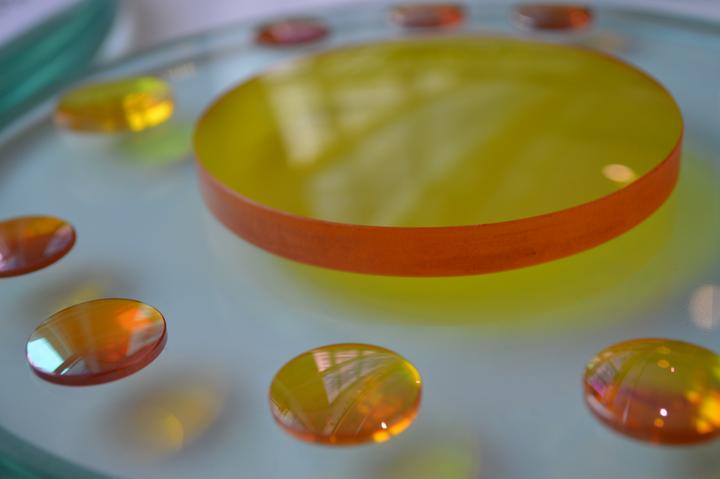
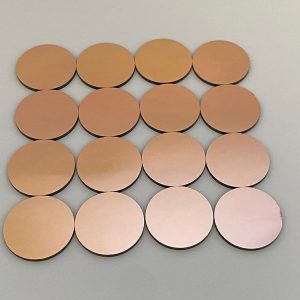
Zinc selenide (ZnSe) provides broad infrared transmission and is widely used in infrared optical systems.
ZnSe windows are particularly relevant to applications involving infrared lasers and certain sensing systems. They can be used where a combination of infrared transmission and optical performance is required.
Typical applications include:
- CO₂ laser systems
- Infrared sensors
- Spectroscopy
- Thermal imaging
- Industrial optical equipment
ZnS Infrared Windows
Zinc sulfide (ZnS) is another infrared optical material used in demanding sensing and imaging applications.
Depending on the grade and manufacturing process, ZnS can provide useful infrared transmission together with good mechanical performance. It is therefore considered for applications where environmental durability is an important factor.
Sapphire Infrared Windows
Sapphire is known for its high hardness, strength, and resistance to scratching and harsh environmental conditions.
Although its infrared transmission range differs from materials such as germanium and ZnSe, sapphire can be useful when mechanical durability and environmental resistance are major design requirements.
Sapphire windows may be considered for:
- IR sensors
- Protective optical windows
- Harsh-environment sensing
- Aerospace applications
- Industrial monitoring systems
Calcium Fluoride Windows
Calcium fluoride (CaF₂) provides broad optical transmission extending from the ultraviolet into the infrared.
It can be used in infrared optical systems, spectroscopy, and other applications where broad spectral transmission is required. However, its mechanical and environmental properties should be evaluated according to the specific operating conditions.
How to Choose an Infrared Window for an IR Sensor
Selecting an infrared window requires more than choosing a material based on its name. The window should be matched to the complete optical and mechanical requirements of the sensor system.
1. Operating Wavelength
The first consideration is the system’s operating wavelength.
For example, thermal imaging systems commonly operate in specific infrared atmospheric transmission bands. The window material must provide adequate transmission throughout the required spectral range.
The target wavelength range should therefore be defined before selecting the material.
2. Detector Spectral Response
The window should be compatible with the spectral response of the detector.
Even if a material transmits infrared radiation generally, it may not be the best choice if its transmission characteristics do not match the detector’s sensitive wavelength range.
3. Anti-Reflection Coating
Uncoated infrared materials can experience significant surface reflection, particularly when the material has a high refractive index.
An appropriate AR coating can reduce reflection losses and improve transmission over the required wavelength range.
Coating selection should consider:
- Operating wavelength
- Angle of incidence
- Polarization requirements
- Environmental conditions
- Operating temperature
- Required transmission
For specialized systems, broadband or multi-band coatings may be considered instead of a standard single-band coating.
4. Window Thickness
Thickness affects both mechanical strength and optical performance.
A thicker window may provide greater structural strength, but it can also increase material absorption and weight. For precision applications, the thickness must be selected according to the mechanical loading, pressure differential, optical path, and system packaging requirements.
5. Surface Quality and Flatness
For demanding infrared optical systems, surface specifications can influence image quality and wavefront performance.
Depending on the application, important specifications may include:
- Surface quality
- Surface flatness
- Parallelism
- Clear aperture
- Edge finish
- Chamfers
The required specifications should be established according to the optical design rather than simply selecting the highest specification available.
6. Environmental Conditions
An IR window used inside a laboratory instrument may have very different requirements from one installed on industrial equipment or an outdoor sensing system.
Environmental factors may include:
- Temperature
- Humidity
- Dust
- Abrasion
- Mechanical shock
- Pressure
- Chemical exposure
These conditions can influence both material and coating selection.
Infrared Window Coatings for Sensor Applications
Coatings are often critical when optimizing the transmission of an infrared window.
A bare optical material may provide acceptable transmission, but surface reflection can reduce the amount of infrared radiation reaching the detector. Anti-reflection coatings are designed to minimize these losses over a specified wavelength range.
For example, a thermal imaging window may require an AR coating optimized for a particular MWIR or LWIR band. A different coating design may be required for an IR laser system or spectroscopy application.
Therefore, coating specifications should be provided together with the target wavelength, angle of incidence, and environmental requirements.
Custom Infrared Windows for IR Detection Systems
Many IR detection systems require optical windows with non-standard dimensions or specifications.
Custom infrared windows can be manufactured according to requirements such as:
- Custom diameter
- Custom length and width
- Non-standard thickness
- Circular, rectangular, or special shapes
- Custom chamfers
- Specific surface quality
- Specific surface flatness
- AR coating
- Broadband or wavelength-specific coating
- Special mounting requirements
For OEM applications, the window can be designed around the sensor housing, optical path, and mechanical interface rather than using a standard off-the-shelf size.
Infrared Window vs. Infrared Lens
Infrared windows and infrared lenses serve different optical functions.
An infrared window is generally a flat optical element used primarily for transmission and protection. It normally has little or no optical power.
An infrared lens, on the other hand, is designed to modify the optical path and can be used for focusing, collimation, imaging, or beam shaping.
A typical infrared imaging system may therefore use both components:
Infrared Window → IR Lens Assembly → Detector
The window protects the system, while the lenses perform the required imaging function.
Working with an Infrared Window Manufacturer
For OEM and industrial applications, selecting an infrared window manufacturer with custom optical manufacturing capabilities can simplify the development process.
When requesting a quotation, it is useful to provide the following information:
- Material preference
- Operating wavelength
- Window dimensions
- Thickness
- Quantity
- Surface quality
- Surface flatness
- Coating requirements
- Clear aperture
- Operating temperature
- Environmental conditions
- Application or detector type
If the exact material is not yet determined, providing the application and operating wavelength can allow the optical supplier to recommend a suitable material.
Infrared Windows from ElyonOptics
ElyonOptics supplies custom infrared optical windows for IR sensors, detection systems, thermal imaging equipment, industrial monitoring systems, and other infrared applications.
Available materials can include Germanium, Silicon, ZnSe, ZnS, Sapphire, and CaF₂, depending on the required wavelength range and application conditions.
We can support customized dimensions, optical tolerances, surface specifications, and anti-reflection coatings for OEM and industrial optical systems.
If you are developing an infrared sensor or detection system and need a suitable optical window, provide the operating wavelength, material preference, dimensions, coating requirements, and application conditions. ElyonOptics can help evaluate the appropriate infrared window configuration for your system.