Optical Components for Infrared Sensor Applications
Infrared sensors are widely used for detection, measurement, monitoring, and non-contact sensing across industrial and commercial applications. Unlike visible-light sensing, infrared sensing relies on specific wavelength ranges, making the selection of suitable optical components an important part of sensor design.
Infrared optical components help transmit, collect, focus, filter, or protect infrared radiation before it reaches the detector. Their optical material, wavelength range, surface quality, and coating are selected according to the requirements of the infrared sensor.
Infrared Optics for Sensor Systems
An infrared sensor may operate in different spectral ranges, including near-infrared (NIR), short-wave infrared (SWIR), mid-wave infrared (MWIR), and long-wave infrared (LWIR).
Each wavelength range places different requirements on the optical components. The appropriate infrared optics should provide sufficient transmission within the target band while maintaining the required optical performance and environmental stability.
Depending on the sensor configuration, optical components may include:
- Infrared lenses
- Infrared optical windows
- Optical filters
- Protective windows
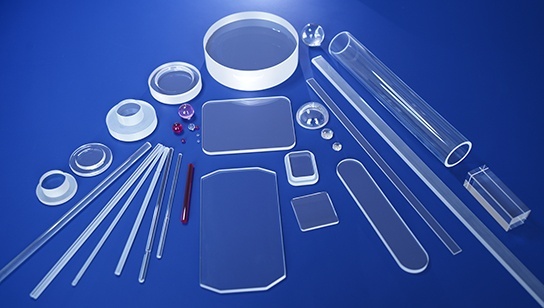
- Custom infrared optical components
These components can be used individually or combined to meet the optical requirements of a specific infrared sensing application.
Infrared Sensor Lenses
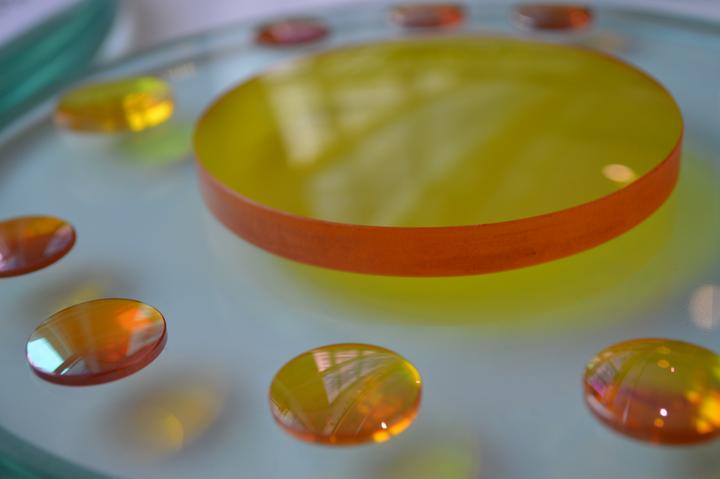
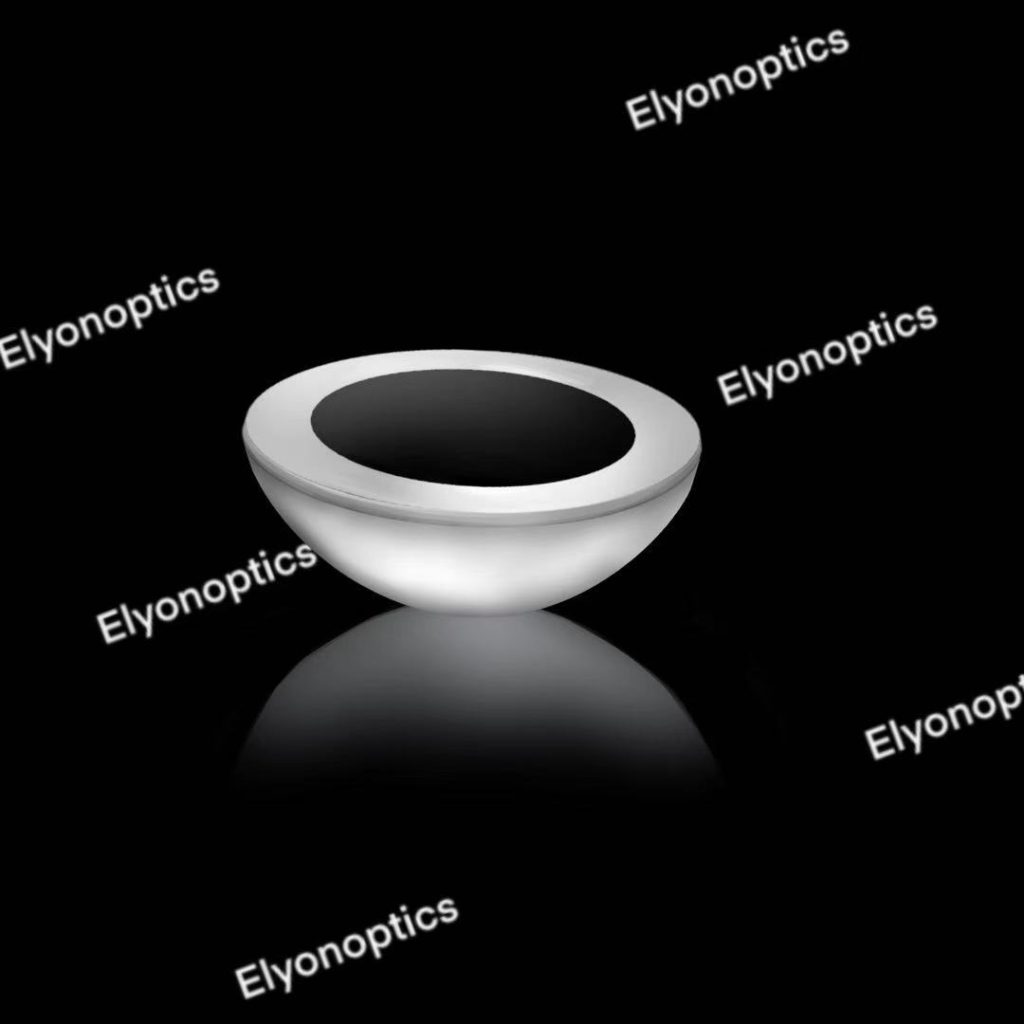
Infrared sensor lenses collect and focus incoming infrared radiation onto the detector. Lens material selection is closely related to the operating wavelength and the required transmission characteristics.
Common materials for infrared optics include Germanium, Silicon, ZnSe, ZnS, CaF₂, and Sapphire. Different materials offer different transmission ranges and optical properties, making material selection an important consideration for infrared sensor applications.
For example, Germanium is commonly used for thermal infrared applications, while Silicon is suitable for certain near-infrared and short-wave infrared applications. ZnSe and ZnS can provide useful transmission across a range of infrared wavelengths and are used in various sensing and imaging systems.
Infrared Optical Windows
Infrared optical windows provide a protective interface between the infrared sensor and the external environment while allowing the required infrared radiation to pass through.
Depending on the application, an infrared window may need to withstand dust, moisture, pressure, temperature changes, or mechanical exposure. At the same time, the window should maintain suitable infrared transmission and optical quality.
Material selection and surface coating can therefore have a direct impact on the performance of the sensor.
Infrared Filters for Sensing Applications
Infrared filters can be used to control the wavelength range reaching the detector. By blocking unwanted radiation and transmitting the required spectral band, optical filters can help improve signal quality and support more selective infrared detection.
Filter requirements vary according to the sensor type and application. Bandpass filters, longpass filters, shortpass filters, and other customized spectral filters may be used in different infrared sensing configurations.
Optical Materials for Infrared Sensors
The optical material should be selected according to the sensor’s wavelength range, environmental conditions, mechanical requirements, and optical performance targets.
Common materials include:
Germanium
Suitable for many thermal infrared applications and widely used for infrared lenses and windows.
Silicon
Used in selected NIR and SWIR applications and available for lenses and optical windows.
ZnSe
Offers broad infrared transmission and is used in various infrared optical applications.
ZnS
Provides useful infrared transmission and can be considered for demanding infrared optical systems.
CaF₂
Suitable for applications requiring good transmission in selected near-infrared and infrared wavelength ranges.
Sapphire
Known for its high hardness and durability, making it useful for protective optical windows in demanding environments.
The final material selection depends on the wavelength range and specific requirements of the infrared sensor.
Applications of Infrared Sensor Optics
Infrared optical components are used in a wide range of sensing applications, including:
- Industrial infrared sensing
- Temperature measurement
- Gas detection
- Flame detection
- Environmental monitoring
- Industrial process monitoring
- Motion and presence detection
- Material identification
- Machine vision
- Infrared spectroscopy
Different applications may require different combinations of lenses, windows, filters, materials, and coatings.
Custom Infrared Optical Components from ElyonOptics
ElyonOptics supplies infrared optical components for infrared sensor, detection, imaging, and industrial sensing applications. Our capabilities include infrared lenses, optical windows, filters, and custom optical components manufactured from materials such as Germanium, Silicon, ZnSe, ZnS, CaF₂, and Sapphire.
Optical components can be specified according to wavelength range, dimensions, surface quality, coating requirements, transmission performance, and application environment.
For specialized infrared sensor applications, ElyonOptics can support customers with customized optical components designed around their specific technical requirements.